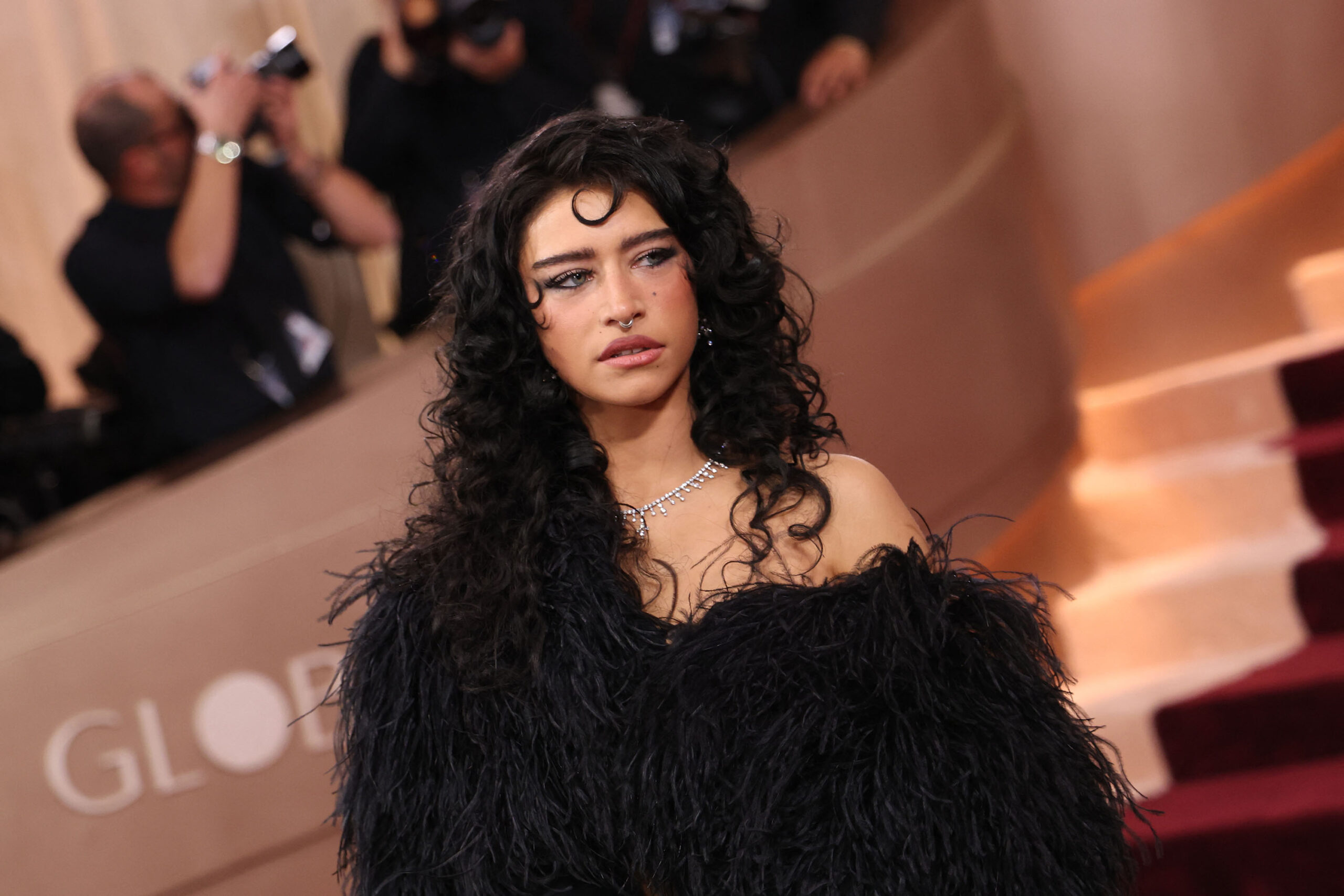
Odessa A’zion attends the 83rd annual Golden Globe Awards at the Beverly Hilton hotel in Beverly Hills, California, on Jan. 11, 2026.
Michael Tran/AFP/Getty Images/TNS
Unsurprisingly, Odessa A’Zion was recently under fire for taking the role of a Mexican-Jewish character for the film “Deep Cuts,” an upcoming A24 film directed by Sean Durkin.
Many felt the choice was tone deaf and I highly agree. A’Zion made the claim of being unaware of the character’s background, which in itself is highly irresponsible.
I can give A’Zion grace and believe taking the role was not with ill-intent, but at some point we have to draw a line and give actors some responsibility to research even the slightest about the characters being offered to them.
Not to mention, the character’s name is “Zoe Gutierrez.” That’s not exactly a name commonly seen outside of the hispanic population.
As a whole, I find it utterly ridiculous that casting white actors for characters with minority backgrounds is still an ongoing issue in 2026. I would argue that representation in Hollywood has regressed in many areas.
I don’t care to celebrate little wins with representation anymore when audiences have to beg for them in the first place. In many cases, it’s not done properly.
Most ridiculous is Disney’s sad attempts to rectify their years of improper representation by setting up women of color for mass waves of hate and scrutiny through casting them for previously white roles.
Rachel Zegler and Halle Bailey got the most backlash for their roles as “Snow White” and “Princess Ariel” respectively. The amount of vitriolic, racist hate they received online was immense and still occurs to this day.
It’s cowardly and a half-baked response to demands for more representation. I for one refuse to celebrate some executive’s “here, damn” form of representation.
Even more ridiculous is Hollywood’s obsession with proximity to whiteness. It shouldn’t be so hard to find actors and actresses darker than a paper bag in leading roles.
This is most prevalent in romance and disproportionately affects women of color. Most romances feature white and or mixed female leads, such as “The Summer I Turned Pretty”, “Anyone But You”, and “The Materialists.”
The best romantic representation I’ve seen lately is Bridgerton, with many people of color serving as love interests such as Simon Basset (Regé-Jean Page), Sophie Baek (Yerin Ha), and Kate Sharma (Simone Ashley).
Fortunately, Bridgerton does a good job of at least giving their characters of color complexity. Unfortunately, they also often stay in a support role.
Where are the love stories that are by and for people of color? I’ve seen so few films come out in recent years that include two people of color as the leads.
Don’t even get me started on stereotypical portrayals. Sure we’ve progressed past the in-your-face racist stereotypes, but it’s hard to enjoy a Mexican-American show where the characters sound like a malformed caricature of my family.
There is a lack of research and effort that irritates me when it comes to Mexican-American representation. I don’t want to see George Lopez on my screen for the millionth time yelling “familia is everything” at me.
Minorities deserve fleshed out, real characters that are more than just their ethnicity.
It’s as frustrating as watching queer characters who serve as nothing more than comedic relief or 2D characters with no depth other than a coming out scene.
The most recent example of this was Will’s (Noah Schnapp) coming out scene in Stranger Things. I’ve never seen a more boring, flat coming out scene in my life.
Representation of queer men is barely starting to get better, such as with “Boots.” I can’t even think about representation of queer women without getting mad.
Often, the pieces of media that do have good representation get cancelled after one season. I’m still mourning “Boots” and “I Am Not Okay With This.”
It’s exhausting waiting for Hollywood to catch up with the world, and I am sick of waiting.