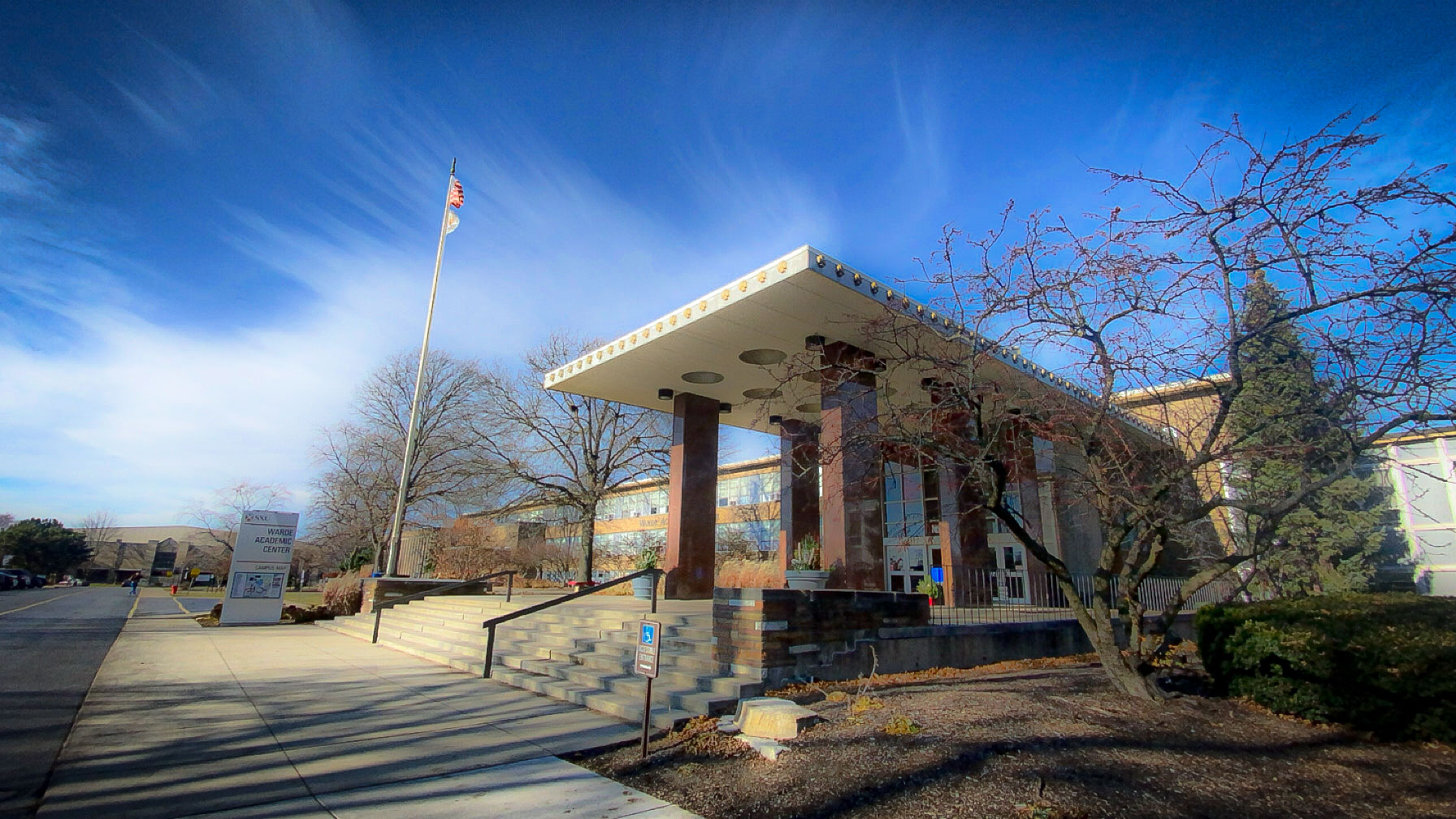
Photo of the Warde Academic Center The Xavierite
On Nov. 6, Trinity Christian College announced it is closing its doors due to financial deficits and declining enrollment. Thirty years ago no one had ever thought of a college closing, but today, we hear about colleges closing or being in financial trouble all the time.
All over the country, higher education is in trouble. According to the National Center for Education Statistics, there has been a 15% decline in enrollment between 2010 and 2021. Between 2010 and 2020, 114 private universities closed. This is nearly double the decade before, in which 59 closed.
Instead of choosing college, people are joining trades, or working. Others are choosing not to go to college because they wish to avoid going into debt. Let’s face it, college loans are scary, and who wants to be paying them off into your 40s, 50s, 60s, or beyond?
With all of this uncertainty, what does higher education need to do to survive?
First, colleges need to offer better educational experiences. Yes, the classroom should still be the primary place for students to learn, but why not expand internship opportunities.
Once a student declares their major, they should immediately get involved within clubs and organizations within that major. It presents them with opportunities to work with others while still meeting deadlines. Additionally, skills that the job market demands can be developed by students.
However, these internships should not be local. Students should be able to be responsible, getting to their internships by using skills they deeply need such as navigation. Many college students lack a sense of direction, due to the invention of GPS.
In previous generations, navigation came simply from memorization. Not only does it invoke critical thinking, but it invokes decision-making. One must decide which path to take, and what the consequences are if the wrong path is taken. In that case, students take responsibility for their mistakes, which comes as a learning experience.
In other words, students need to learn how to be old-school. Phones prevent students from having a full attention-span. With no distractions, stress is decreased and productivity increased.
Another problem that higher education institutions face is that enrollment rates are so large, making it hard for students to get involved, which brings up the next point.
Colleges and universities, not including SXU, should make their class sizes smaller.
SXU course sizes range from 12-45 students, meanwhile other higher education institutions have lecture halls able to seat almost four hundred students. In such lecture halls, not much learning is done. Students can only pay attention for so long, especially if it isn’t direct teaching.
According to studies, students in large lecture halls lose focus between 10 and 15 minutes into lectures.
Meanwhile at SXU, that isn’t the case. Small class sizes enable students to have interactions on a daily basis with their professors. Not only is the amount of learning increased, but they are encouraged to pay attention.