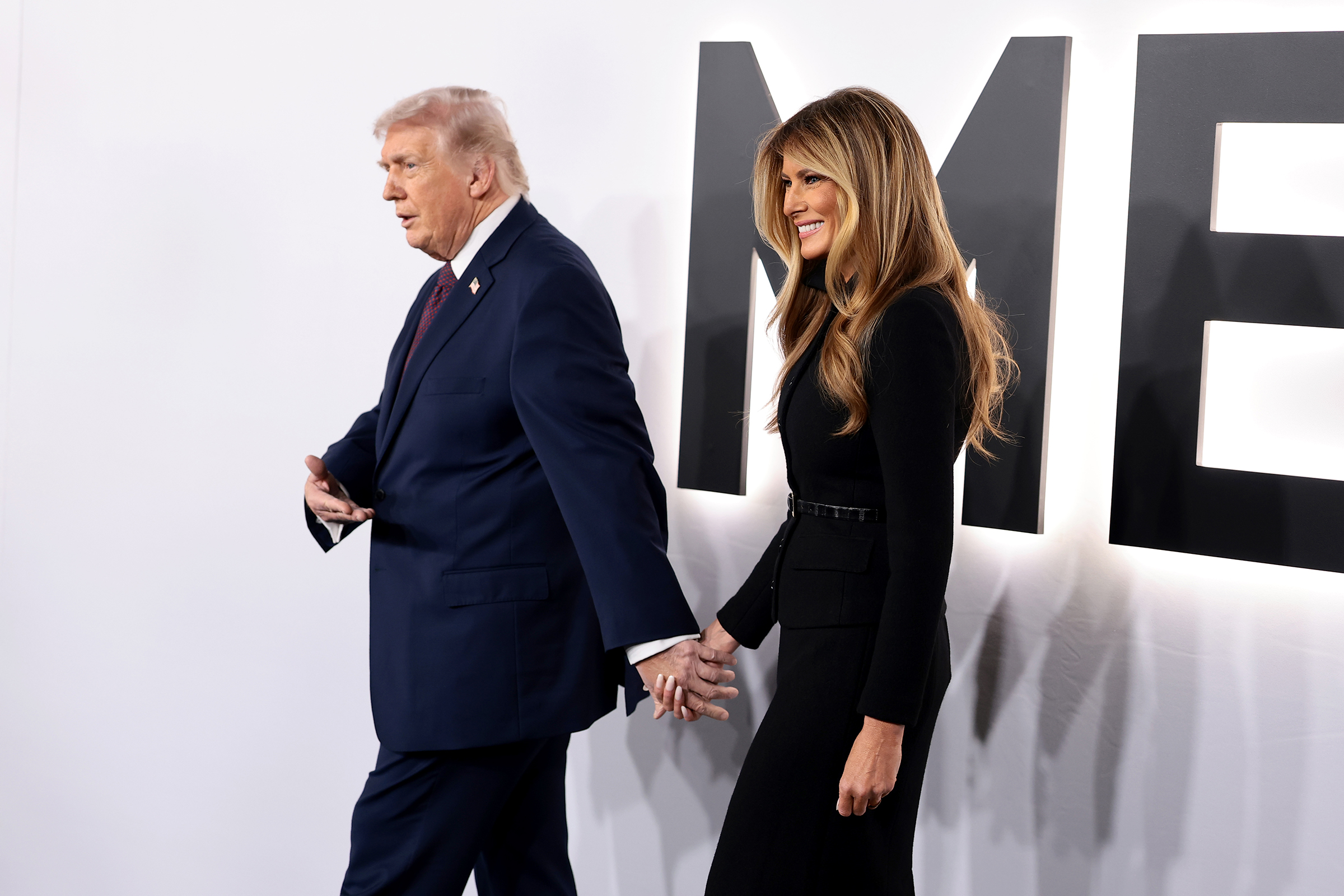
President Donald Trump, left, and first lady Melania Trump attend Amazon MGM’s “Melania” world premiere at the Trump Kennedy Center on Jan. 29, 2026, in Washington, D.C.
Dimitrios Kambouris/Getty Images/TNS
There was a time in American politics when scandal could end a presidency. The resignation of Richard Nixon during Watergate symbolized an era when bipartisan agreement on misconduct was still possible. Today, controversy rarely produces the same consequences—it often strengthens support instead of weakening it.
Donald Trump’s political career reflects that shift. Despite impeachments, investigations, civil cases, and constant controversy, his core support has remained steady.
Rather than weakening his reputation, many accusations have strengthened it. For many supporters, each new investigation reinforces the belief that he is being unfairly targeted by political opponents and media institutions.
Politics has become identity-based in a way that makes accountability more complicated. When criticism of a leader feels like criticism of your values or your side, loyalty becomes stronger than doubt.
In that environment, scandal does not automatically change minds. It often deepens division instead.
The media landscape has also transformed how scandal functions. Americans no longer consume the same news sources or even the same versions of events.
Cable networks, social media platforms, and online influencers create separate realities for different audiences. Algorithms reward fake news and reinforce prior beliefs.
When citizens cannot agree on basic facts, it becomes harder to agree on consequences. Accountability weakens when there is no shared understanding of what happened.
An example of this would be Donald Trump’s appearance in documents related to Jeffrey Epstein and the allegations associated with those files.
Some argue that the public discussion raises questions about accountability and personal conduct for leaders. Supporters respond that allegations are unproven and should not be treated as facts, framing the issue as politically motivated.
Regardless of perspective, these controversies become political symbols. In a polarized climate, even unverified accusations are pulled into broader arguments about loyalty and judgment.
There is also the issue of scandal fatigue. When controversy is constant, outrage begins to lose its force. In tuen people stop paying attention.
Voters become desensitized to headlines that once would have been shocking. Many shift their focus to economic performance, judicial appointments, or foreign policy instead of personal conduct.
For some Americans, policy outcomes matter more than character. For others, moral leadership remains central to democratic health.
The larger issue goes beyond one individual. If scandal no longer meaningfully shifts public opinion, then traditional political and social consequences may be fading.
Democracy depends not only on elections but on shared standards of accountability. When those standards weaken along partisan lines, the system itself becomes fragile.
The real question is not whether controversy exists–it is whether, in this polarized era, scandal still has the power to matter at all.