
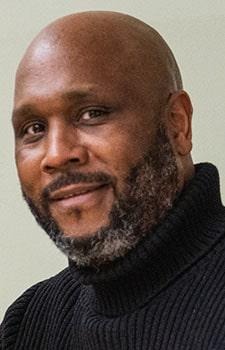
Professor Vincent Davis headshot
SXU Staff Directory
In my time at Saint Xavier University, I have encountered many professors with interesting passions outside of education, such as Cyndi Grobmeier, Ph. D and her organ donor non-profit or Peter Kreten and his passion for radio.
One professor whose passion has always inspired me is Vincent Davis, Ph. D. and his research on genealogy. Before meeting Davis, I knew very little about genealogy. Most of my knowledge came from high school biology and videos about DNA tests.
After taking his family communication class this semester, I learned how expansive and unique genealogy can be. I decided to speak with Davis further in order to gain a better understanding of his journey with genealogy and share his passion with others.
Davis describes his genealogy journey as starting from home, after discovering a family secret that pushed him to explore his family history further.
“Finding out the truth about my paternity is what started it all. I found some divorce papers that had my brothers’ names on it but not mine—it all snowballed from there,” Davis stated.
He warns that genealogy is a touchy subject that can lead to unwanted discoveries and pushback from family members.
“If you don’t want the truth, don’t start [exploring genealogy]. Talking to family has the potential to go one of two ways: people are gonna be extremely supportive and people are gonna be extremely dismissive of your discoveries. DNA has the potential to disprove family narratives, and some people are hellbent on sticking to those family narratives. Presenting [evidence] that goes against those narratives can cause conflict,” Davis explained.
Davis described how his experience with false narratives within his family sowed mistrust on his end, affecting his perception of family.
“I’m of the opinion that people have a right to know what’s going on in their family, good or bad. It’s not right to keep secrets, you have a right to decide what you do with that information. Especially if it pertains to parents or grandparents. Imagine finding out something as a child versus as an adult. You’d react differently depending on when you’re told. Being told once you’re an adult has the potential to be very contentious and cause backpedaling.”
He went on to discuss how these family narratives have the potential to impact family dynamics, which Davis found especially true to his family.
“Family dynamics after discovery [of a secret] was one of the things I focused on in my dissertation. You’d like to think it brings people closer, but it can just as easily push them apart. I only have my experience to go on—many of my half-siblings still do not speak to me,” Davis stated on his experience with being introduced to new family after discovering them, and the rejection that followed.
On the subject of intersectionality, Davis describes race and the history of racism as a great factor in genealogy research. He discusses how it affects record keeping and introduces various types of family narratives.
“If you want to go back to say more than two or three generations [as a person of color], it’s near impossible to find information. Many records weren’t kept or were kept improperly. With my own family, I can trace my caucasian ancestors back to the fourteen-fifteen hundreds. I can only trace my african-american so far and oftentimes I have to guess who they are.”
Davis continued to explain how records such as slave registries gave little info or had missing information on people, making it difficult to find certain ancestors.
“People on slave registries were listed by gender and age, not name. In some census records, names were written incorrectly or missing entirely. For example, my great great grandfather, he’s in the records in 1891 but not before that. He’s missing in the 1870 census when he was born and every census until an 1891 marriage registration record. He shows up on all the other records after that,”
“His family all show up on the previous census’ other than him; he was skipped twice. That’s a major thing and something I noticed that especially affects people of color,” Davis stated.
According to Davis, genealogy is like a lifelong puzzle that requires deep investment and commitment. He advises those interested in genealogy to prepare and expect to do tedious research and self-correction.
“When I started my family tree back in 2006, I had six people. [Now], between me and my wife’s family I have 4000 verified people. When I tell you it’s like a puzzle, it really is a process of putting all these pieces together. You have to verify people through records. Even if you’re sure someone is your ancestor, you need to officially confirm they existed on paper. That’s what makes the process take so long, but it makes it even more gratifying once you do put those pieces together.”
Davis provided various resources for those in the early stages of researching their own genealogy. He recommends starting with familysearch.org or ancestry.com. He says it’s best to get DNA tests on sale for those who wish to pursue DNA research.
About Post Author