
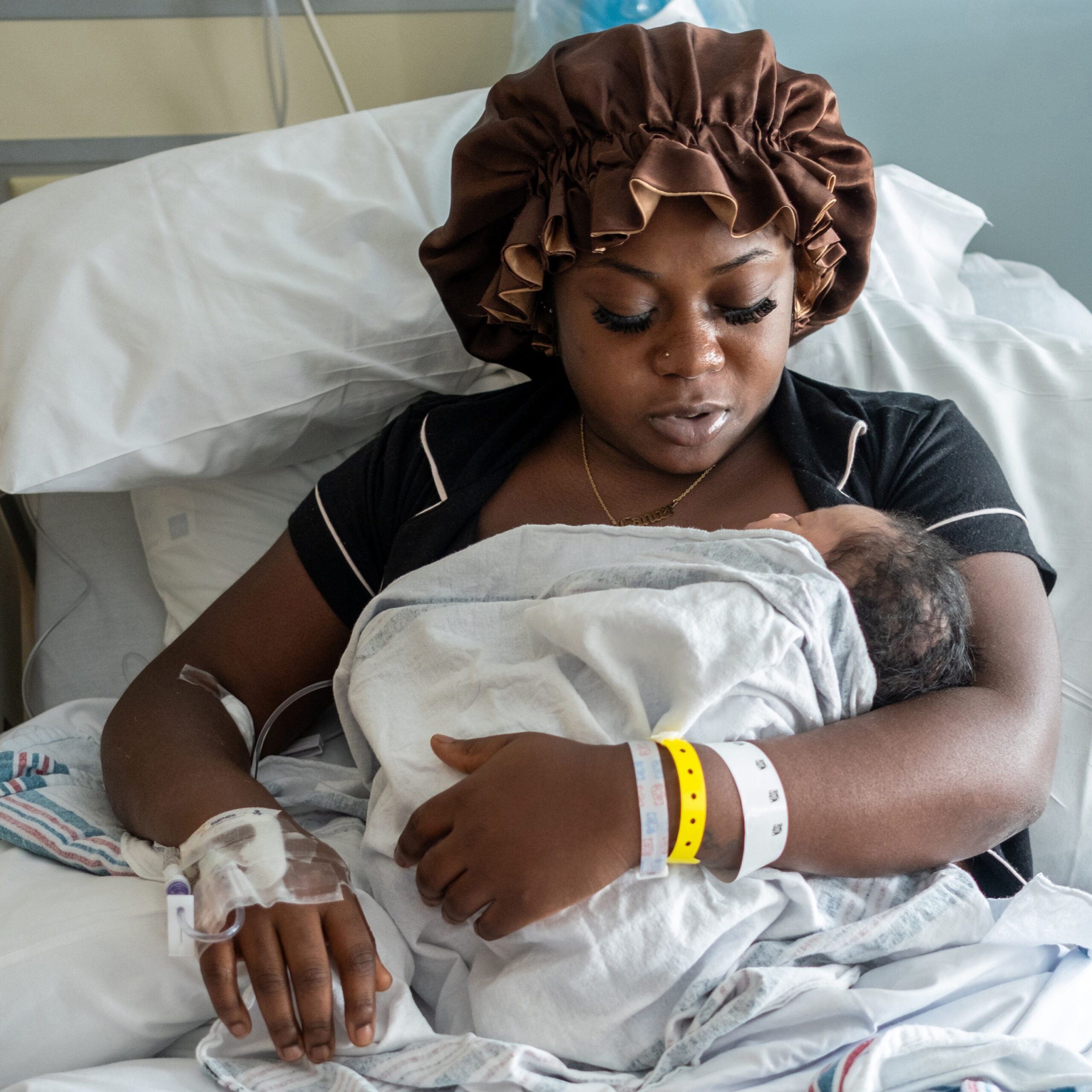
Brianna McKenzie, 23, holds her newborn baby boy in the Labor & Delivery Unit at MLK Community Hospital on Thursday, Aug. 10, 2023, in the Willowbrook neighborhood of Los Angeles
Francine Orr/Los Angeles Times/TNS
In Intro to Health Communication (COMM-216-01-2026S) we have discussed the fact that some groups face worse health outcomes–not because of who they are, but because of the social and economic aspects surrounding them.
The statistics are very eye opening. A baby born and raised in Central Africa is estimated to die an average of 13 years sooner than a child born in Europe. In the United States, people living in the richest neighborhoods live about 20 years longer than those in the poorest areas. Health is not just all about genetics. It is about having resources, finances, and how people are treated when they ask for help.
Black women face some of the most serious downsides. According to the Centers for Disease Control and Prevention, Black women in the US are three times more likely than White women to die during pregnancy or childbirth, even though many of these deaths could have been prevented with early care–care which some do not have access to. During the COVID-19 pandemic, Hispanic, Black, Alaska Native, and Native American communities were twice as likely to die from the virus compared to White Americans of the same age.
These patterns show a deeper issue in the healthcare system.
A recent report from CBS News shared a story about an Indiana hospital where a doctor and nurse were fired after a woman was forced to give birth in her car outside the hospital after being turned away. Stories like this raise serious questions about how women, especially women of color, are treated when they say they are in need of medical attention.
A Personal Perspective
My friend Nyla, also a college student, experienced something similar. Nyla, who is a former high school basketball player, injured her knee during a tournament. She said she heard a pop and felt shooting pain. At the emergency room, she felt like the staff did not take her seriously. “They told me it was probably just a sprain and to take some pain killers and rest,” she said. She kept explaining that the pain was severe and that she could not put weight on it.
Weeks later, after begging for more tests, she learned she had a torn ACL that required surgery. By then, the swelling had gotten worse. “I did not feel heard or taken seriously,” Nyla told me. Many women have similar experiences.
For students at Saint Xavier University, which many study nursing, biology, or other health fields, this issue is huge as we grow older. SXU’s mission is very passionate about service. Listening to patients, believing them, and providing proper care plays into that mission.
Black women should not have to fight to be heard in places that are meant to heal them. Change starts with awareness. With future healthcare workers like those around us who choose to do better, we can make a difference.
About Post Author
