
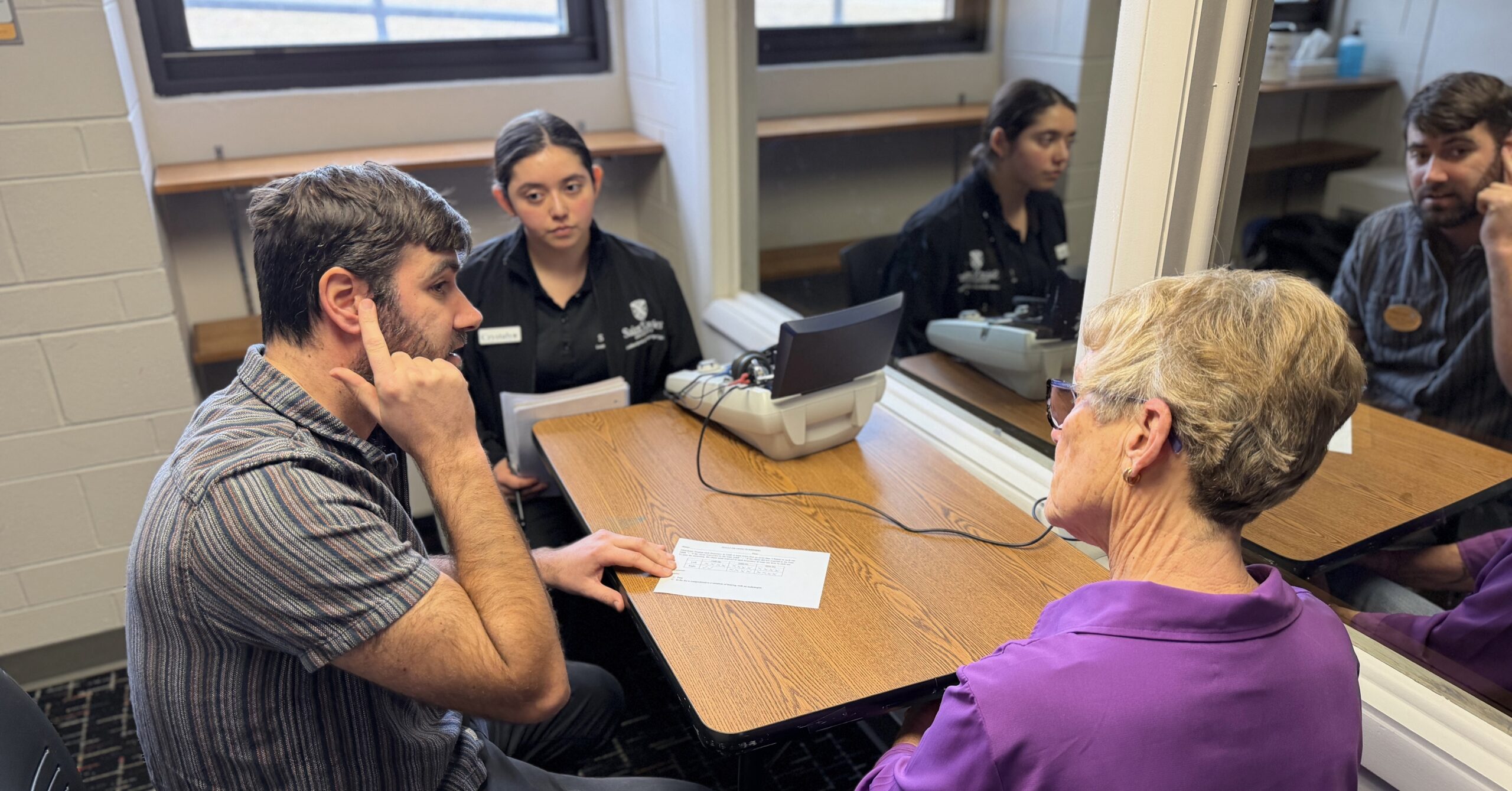
Screening explanation
Lisa Osier
The Ludden Speech and Language Clinic at Saint Xavier University (SXU) hosted a free adult hearing screening event on Thursday, Feb. 27, from 9 a.m. to 12 p.m., that offered members of the community an opportunity to check their hearing health without the need of health insurance.
The event was open to any adults in the surrounding community who may be experiencing changes in their hearing or who simply wanted a routine check. The screenings aimed to promote early detection of hearing concerns and connected individuals with appropriate follow-up care if needed.
Melanie Greenspan, assistant professor and clinical supervisor for Communication Sciences and Disorders, mentioned how the department “offers these screenings to support the community.”
The screenings were conducted by student clinicians under professional supervision of a licensed speech and language pathologist. According to Greenspan, the event allowed the university’s clinical students “an opportunity to get their clinical hours.”
Participants met with a student clinician and answered questions about their hearing concerns. They then completed a screening using headphones and responded to tones at different volumes.
“They have to raise their hand if they hear the sound,” Greenspan said, noting that the results determine whether someone needs further evaluation.
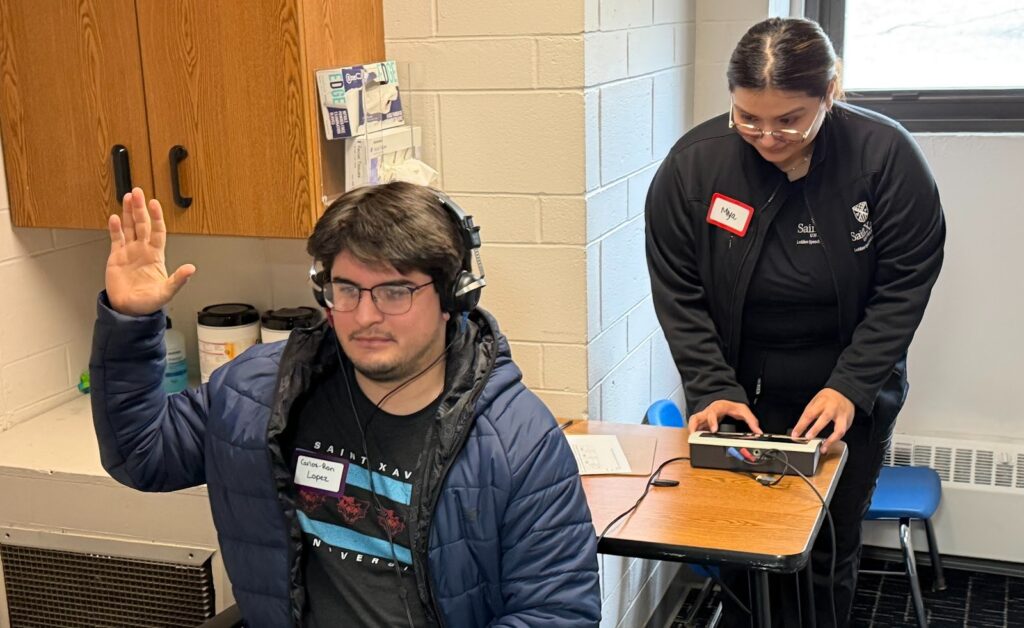
Hearing screening in progress
Lisa Osier
A typical screening takes “about 20 to 25 minutes,” she said.
The screening process was made to identify potential concerns rather than provide a full diagnostic evaluation. If results suggested possible hearing loss, participants were referred for a comprehensive hearing test.
She emphasized that the screening is not a diagnosis. “It’s not a diagnosis of hearing loss. It’s kind of the first step. Do you need further evaluation or do you not?”
Greenspan said the clinic offers the hearing screening “about twice a year, one in the fall semester, one in the spring semester.”
If someone misses the event, “we put them on a waitlist to be notified for the next event.”
Lisa Osier, program director of the Communication Sciences and Disorders department, mentioned a link between untreated hearing loss and a higher risk of dementia. She explained that getting your hearing tested and receiving treatment, if needed, can help lower that risk and protect long-term brain health.
Untreated hearing loss can affect a person’s communication, social engagement and overall quality of life.
“Hearing loss can happen gradually, and many people don’t realize how much they’re missing,” said Osier.
Greenspan stated, “It is really recommended that adults get their hearing screened across [their] lifespan.” She added, “Definitely don’t wait and take some action for [any hearing concerns].”
Beyond screenings, the clinic offers assessment and treatment services. “We service people across the lifespan, so really young children all the way through late adulthood,” Greenspan clarified.
The event highlighted the Ludden Clinic’s commitment to community outreach while giving student clinicians hands-on professional experience.
About Post Author
