
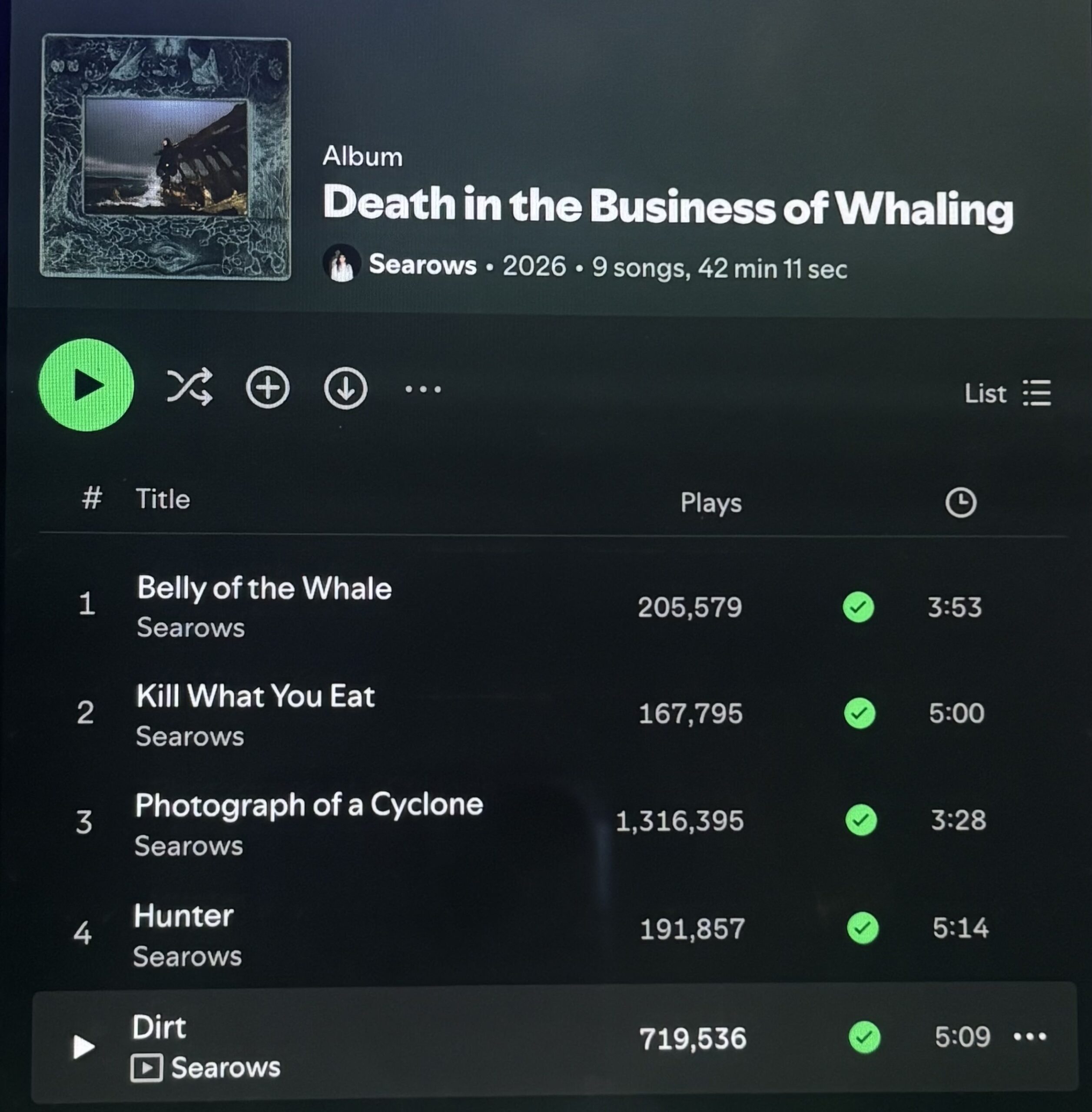
Spotify page for “Death in the Business of Whaling” The Xavierite
On his second album, “Death in the Business of Whaling,” Searows carves a niche for himself in the indie-folk scene with devastating lyricism, haunting vocals, and complex instrumentation.
Alec Duckart, the artist behind Searows, first appeared on my radar in the form of TikToks which used snippets of his songs and highlighted their gut-punch lyrics. Before I even knew who this artist was, I was captivated by his writing.
While other music-lovers may focus on instrumentals or vocals, the lyrics of a track will always be more important to me. It’s most likely because I’m a writer myself. I don’t know much about chord progressions or key changes, but I know what goes into crafting a good line.
Duckart’s lyricism is hard to describe as it manages to be both specific and universal. Many compare him to Phoebe Bridgers, and I can see the resemblance between their vulnerable, raw verses.
Like Bridgers, Duckart’s dreamlike vocals don’t merely scratch the surface; they claw their way under your skin.
This is evident in the album’s sixth track, “Dearly Missed.” The track was first released in Oct. 2025 as the lead single for the album.
Beginning with shoegazey guitar and soft vocals, the track’s lyrics create an almost eerie sense of dread. “You probably grew up being dishonest/What else could you do, though?/It’s all that you knew,” Duckart sings throughout the first verse.
The song flourishes into a character sketch of a man who’s been through some unspecified traumatic event. Duckart then uses this lens to explore poignant rage and grief.
After the first verse, the chorus comes in with crashing drums and visceral vocals that release all the previously built tension. The track’s full emotional resonance is realized as Duckart’s vocals grow more and more desperate.
The track’s title comes from the bridge, where Duckart sings: “By some sort of coincidence/He drove his car off of the river bridge/They never found him, and they haven’t since/He’s dearly missed.”
“Dearly Missed” is a prime example of Duckart’s narrative lyricism. His lyrics can read like poetry, which is why it didn’t surprise me to learn the album’s closing track, “Geese,” was inspired by a famous Mary Oliver poem of a similar name.
The track draws direct parallels to Oliver’s poem and tells the listener: “You do not have to do good/But you cannot do nothing.”
While Duckart’s lyricism is my favorite feature of his music, there’s also plenty to appreciate when it comes to instrumentation. From the nostalgic guitar on “Photograph of a Cyclone” to the seamless banjo on “Belly of the Whale,” Duckart combines skillful folk elements with his thoughtful lyrics.
The combination of the two serves as the backbone for an album that feels expansive despite consisting of only nine tracks and a 42-minute runtime.
As Irmak Altinok wrote for Firebird Magazine last year, Duckart’s music “feels like it’s made for a Chicago winter, those days that start with the warmth of the sun on your face and end with a snowstorm.”
While temperatures drop and snow continues to fall, I’ve found “Death in the Business of Whaling” to be the perfect soundtrack for this winter season. I’d highly recommend it to anyone who appreciates good folk music —particularly fans of Bon Iver, Phoebe Bridgers, or Noah Kahan.
About Post Author