
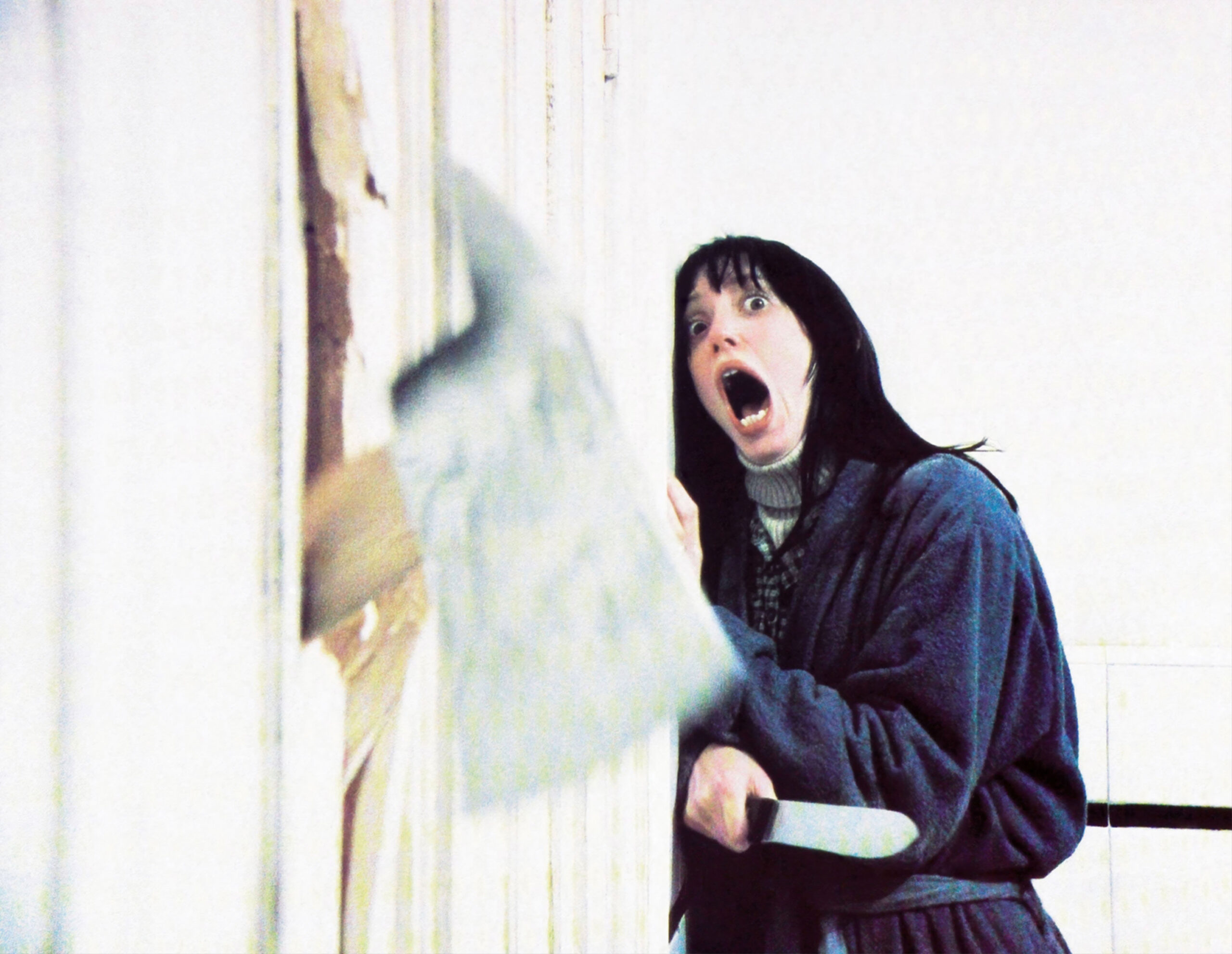
Shelley Duvall as Wendy Torrance in “The Shining” (Warner Brothers/Zuma Press/TNS)
“The Shining” stands as one of the most iconic horror movies in film history. Starting Dec. 12, it will be shown in IMAX for the first time ever. Evidently, its forty five year legacy is one to be respected.
How did the film come to be such a cornerstone of the horror genre? Directed by Stanley Kubrick, “The Shining” is an adaptation of the 1977 Stephen King novel of the same name.
It follows the Torrance family as they spend the winter alone at the Overlook Hotel. As Jack Torrance (Jack Nicholson) becomes disillusioned with his own writing and his son, Danny (Danny Lloyd), sees increasingly disturbing psychic visions, the hotel devolves into a place of homicidal horrors.
In terms of its merit as an adaptation, “The Shining” isn’t very good. Kubrick takes many creative liberties and leaves out major parts of the novel. King himself didn’t find the film representative of his novel and called it “totally empty and totally flat.”
However, the mark of a good film isn’t how well it adapts source material. The mark of a good film is one that reaches through the screen, takes hold of the audience, and refuses to let go even after they’ve left the theater. This is what “The Shining” accomplishes.
In 1980, the film performed well at the box office. Critics gave mixed reviews, and although it wasn’t a flop, it also wasn’t an immediate success.
It took time for “The Shining” to reach the revered fame it holds today.
Over time, it became a cult classic for those who loved Kubrick’s precise directing style, Nicholson’s unsettling performance, and Shelley Duvall’s harrowing, desperate portrayal of Wendy Torrance.
Slasher films were particularly popular during the ‘70s, but Kubrick did something different with “The Shining.” There weren’t cheap jumpscares or excessive gore. The film builds tension through the performances and directing alone.
Much of the film’s success could be attributed to Kubrick’s directorial choices. Behind other cult classics like “2001: A Space Odyssey” and “Eyes Wide Shut,” Kubrick is known for his meticulous and perfectionist style.
This style contributed to Kubrick’s rise to legendary director status. Unfortunately, his style also lended itself to a somewhat distressing atmosphere on the set of “The Shining.”
Duvall often referenced the emotional turmoil she went through during her time filming “The Shining.”
In an interview given to the Hollywood Reporter, Duvall explained how Kubrick never accepted anything before the 35th take. This meant hours and hours were spent getting the perfect take of Duvall crying and screaming in terror.
Anjelica Huston, who was Nicholson’s girlfriend at the time of “The Shining” shoot, thought Duvall’s treatment boiled down to misogyny.
“It seemed to be a little bit like the boys were ganging up,” Huston said in the same HR interview. “[…] When I saw her during those days, she seemed generally a bit tortured, shook up. I don’t think anyone was being particularly careful of her.”
While many admire Duvall’s performance in this day and age, it wasn’t received well upon the film’s release. Duvall was famously nominated at the “Razzies”—a satirical award show honoring the worst films of the year—for Worst Actress.
In 2022, her nomination was rescinded in light of the treatment she endured from Kubrick.
The legacy of “The Shining” is one of pure psychological horror. While shooting conditions were less than ideal, they did make for a film with intense attention to detail and raw performances from everyone involved.
“The Shining” is cemented in our culture forever. Whether it’s references to the film in modern media (like this episode of “Bob’s Burgers”) or recreations of Kubrick’s iconic shots (like the Kubrick stare in “Wednesday”), the film has grown into a cultural mainstay.
Tickets to see “The Shining” in IMAX are on sale now and can be found here.
About Post Author