
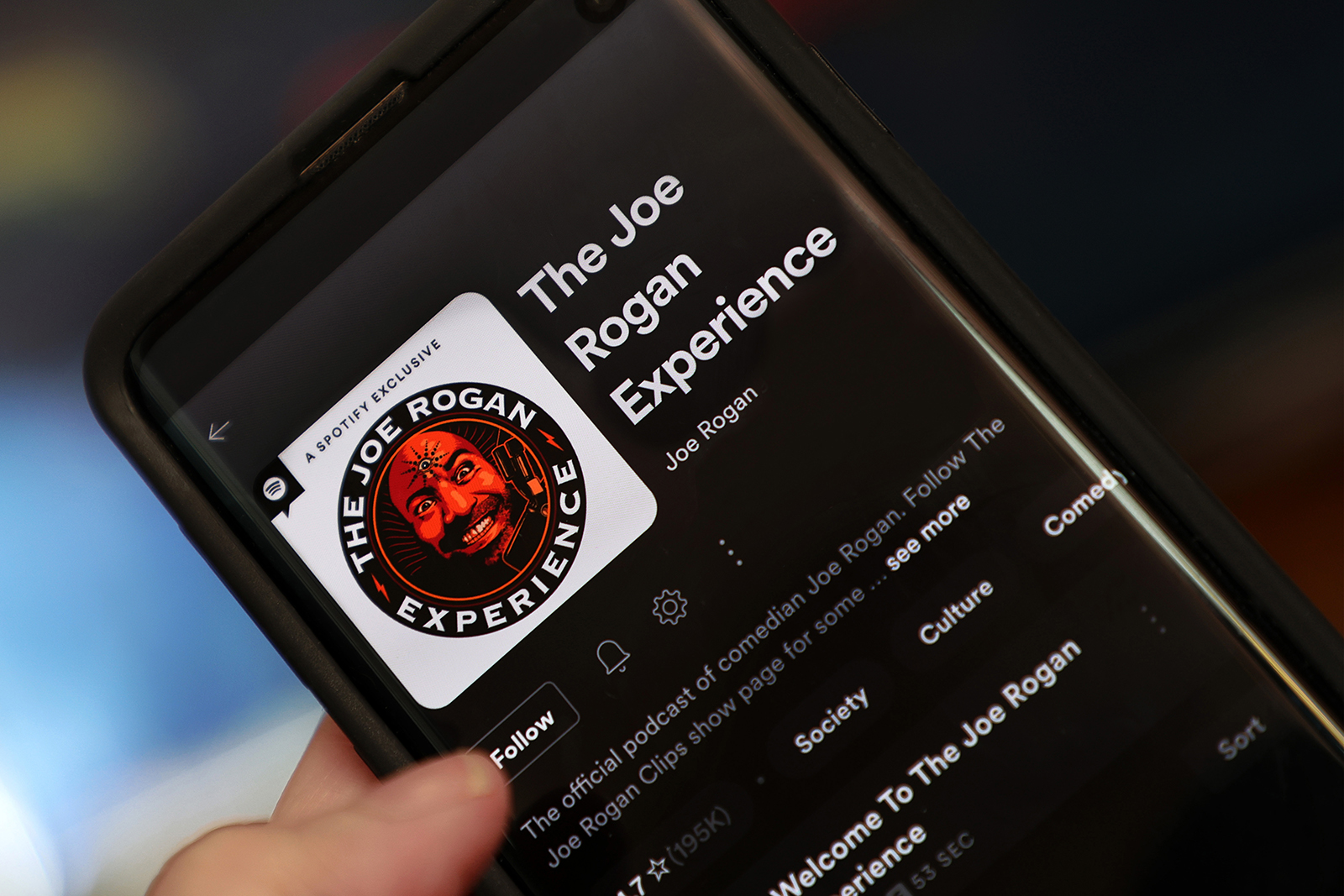
Joe Rogan’s podcast page on Spotify Cindy Ord/Getty Images/TNS
In this day and age, it seems like every public figure goes on podcasts. Podcast interviews have become a normalized part of press junkets for movie, album, and book releases. It’s even become commonplace for high-ranking politicians to go on podcasts.
If actual journalists were hosting these podcasts, this phenomenon wouldn’t be worth much analysis. However, a significant number of podcasts are hosted by people without credentials other than some basic equipment and a penchant for conversation.
This isn’t to say podcasts can’t be funny, creative, and worthwhile pieces of media. Many popular podcasters take their work very seriously. It becomes a slippery slope when they stray from their niches, though.
For example, comedian Theo Von hosted Donald Trump on his podcast “This Past Weekend” in August of 2024. Just seven days prior, he hosted Bernie Sanders.
Von has no history in politics and no background as a journalist or interviewer besides his podcast, which he started in 2016.
Kamala Harris also included podcasts in the media tour for her presidential campaign. Most notably, she was a guest on “Call Her Daddy,” hosted by Alex Cooper.
It’s easy to wonder why some of our country’s most prominent politicians would make time for podcasts hosted by people with no real qualifications.
Put simply, it’s because they know young people will watch. Gen Z may not be tuning in to TV spots or news segments, but they do listen to podcasts.
Around 47% of the Gen Z population in the U.S. are monthly podcast listeners. Much like our politicians know how to reach younger generations through social media, they also know podcasts are a surefire way to reach millions of young viewers.
Podcasts were so integral to the past election cycle that during Trump’s victory celebration in November of 2024, his longtime friend Dana White specifically thanked the podcasters for their endorsement and promotion of Trump.
“I want to thank the Nelk Boys, Adin Ross, Theo Von, Bussin’ With The Boys, and last but not least, the mighty and powerful Joe Rogan,” White said.
Several of these podcasters even attended Trump’s inauguration early this year.
Politicians aren’t the only ones who understand the power and influence of mediocre podcasts, either.
In the past, Hollywood’s most respected movie stars had an air of esteem and sophistication around them. What does it say about the current state of journalism that some of the most lauded actors of our time are being interviewed by washed-up comedians and football players?
Leonardo DiCaprio recently completed the press tour for his newest film “One Battle After Another,” directed by Paul Thomas Anderson.
On Sep. 26, 2025, DiCaprio and co-star Benicio del Toro appeared on the podcast “New Heights,” hosted by Jason and Travis Kelce.
“Be prepared for the least professionally done interview of all time,” Jason Kelce joked at the beginning of the interview.
“We are in way over our heads,” Travis Kelce agreed.
In this instance, at least the Kelce brothers know they’re unqualified to be hosting these guests. The interview itself falls flat because there’s such a notable detachment between the guests and the hosts. It comes off as forty minutes of small talk rather than an engaging interview.
Podcast interviews like these beg the question: are views and clicks really more important than a qualified interviewer well-attuned to their guests?
It’s not often that actors do longform interviews, and when they’re paired with an engaging podcast host it can work wonders. A good podcast interview can show viewers a lot about the guest’s personality outside of their work, as well as their in-depth thoughts about whatever they’re promoting. Sometimes, they can also be just plain fun.
An example of a fun, good quality podcast is “Royal Court,” hosted by influencer and comedian Brittany Broski.
“Royal Court” is a medieval-themed podcast where guests compete for a spot on Broski’s fictional council by answering interview questions.
Broski’s podcast works because it’s marketed as being fun and doesn’t find shame in that. Broski probably won’t host a future presidential candidate or actors like DiCaprio, and she shouldn’t. That doesn’t negate the quality; it shows Broski knows her audience and what guests will work with her creative vision.
When podcast hosts know their place in the media sphere and thrive there, their work is in turn much more authentic. It’s annoyingly noticeable when a podcast host is out of their element with a guest, and it more often than not delivers an awkward interview.
The best person to interview politicians and esteemed public figures probably isn’t the comedian-turned-podcast host or two football-playing brothers, but that’s what audiences watch.
At a certain point, it’s crucial to decide if this decline in journalism is the fault of the media or the media consumers themselves. If these mediocre interviews get millions of views and sway presidential elections, then what’s the need for qualified journalism?
About Post Author